Start here
New to chess? Each side starts with sixteen pieces. White moves first, then the sides take turns. You win by checkmate: the enemy king is attacked and cannot escape, block or capture the attacker.
 NewChess
 NewFreeCell
 NewMinesweeper
 NewMahjong
 Sudoku
 Feudaly
 Dead Moon Relay
 Gridora
 COMET
 Molecular
 Paper Peaks
 Powderlab
 Klondike Solitaire
 Spider Solitaire
Chess rules in one sentence: move your pieces in turns and checkmate the enemy king. Below is a real game from the build, step by step, and then every rule in detail.
Play Chess →A ManyPlay browser walkthrough · Checked . Screenshots below show the actual game. Illustrated catalog covers are presentation artwork. Who publishes these games?
Verified opening-board solution
New to chess? Each side starts with sixteen pieces. White moves first, then the sides take turns. You win by checkmate: the enemy king is attacked and cannot escape, block or capture the attacker.
Here is a real two-player game from the starting position on the 3D board. The board turns toward the side whose turn it is.
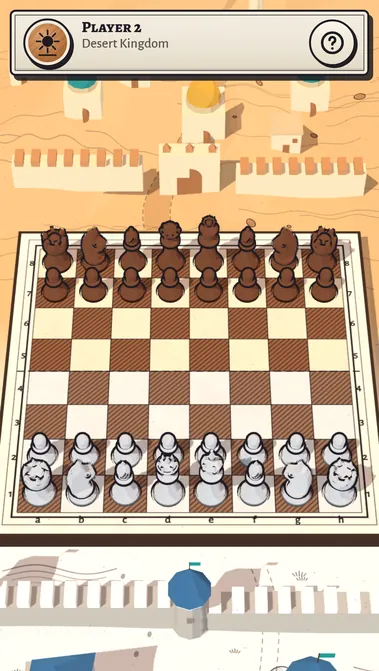
White plays f3 and Black answers e5. The pawn on f2 no longer guards the diagonal from h4 to the white king on e1, and the black queen can now reach h4.
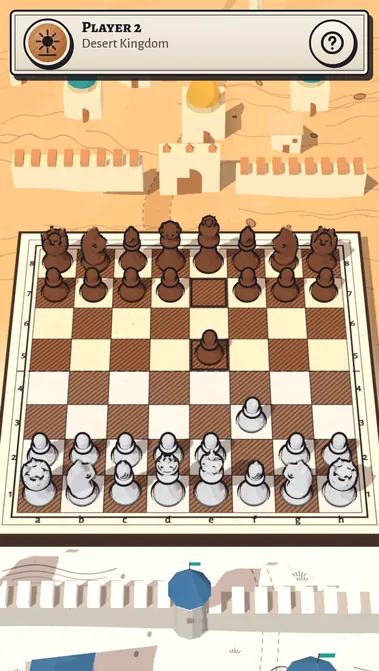
White plays g4. Now the squares f2 and g3 are empty, and nothing stands between h4 and the king.
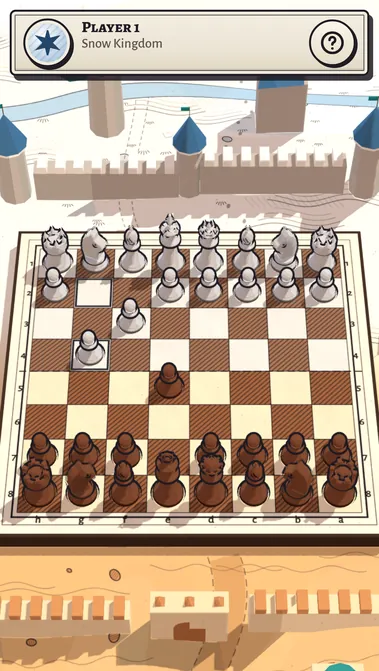
Black plays Qh4. The queen attacks the king along the open diagonal; the king has no free square, nothing can block on f2 or g3, and nothing can capture the queen. The game shows Checkmate! and Black wins.
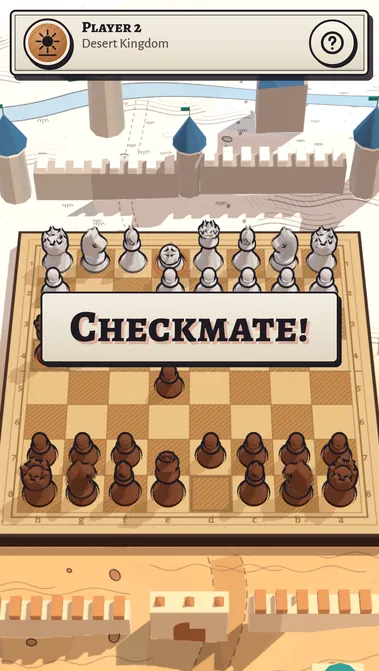
This is the shortest possible game of chess, often called the fool's mate. Both of White's moves weakened the pawns in front of the king, and one queen move was enough. The lesson for real games: in the opening, move the centre pawns and develop knights and bishops; keep the f- and g-pawns in front of your king until it is safe.
The king is attacked, it cannot step to a safe square, no piece can block the attack and the attacker cannot be captured. The game ends at once.
Two moves for Black, as in this example: 1. f3 e5 2. g4 Qh4 checkmate. It only happens when White weakens the king's side.
Yes. Choose Two players and pass the phone or share the computer; the board turns to the side whose turn it is.
The game also has five computer levels, the Southern Campaign, the daily puzzle and kids mode. This example checks one two-player game in the browser build, not every mode.
Report a changed rule or control. Browser and Android editions can differ; the checked date describes this walkthrough, not a new game release.
Chess is a game for two players on a board of 64 squares, eight rows by eight columns, coloured light and dark in turn. The rows are called ranks and are numbered 1 to 8; the columns are called files and are lettered a to h. Every square has a name, such as e4, and the record of a game is written with these names. Place the board so that each player has a light square in the right-hand corner.
You win by checkmate. Checkmate means the enemy king is attacked, and there is no way to save it: the king cannot step to a safe square, no piece can block the attack, and the attacking piece cannot be captured. The king itself is never taken off the board; the game ends the moment it is checkmated. A player may also resign, which counts as a loss.
Each side has sixteen pieces: eight pawns, two rooks, two knights, two bishops, one queen and one king. White sets up on ranks 1 and 2, Black on ranks 7 and 8. The pawns fill the second rank (the seventh for Black). On the first rank, from the corners inward, stand the rooks, then the knights, then the bishops. The queen stands on the square of her own colour, the white queen on d1 and the black queen on d8, and the king takes the last square beside her, e1 or e8. White always moves first, and then the players take turns, one move each. You may not skip a move.
The king moves one square in any direction: forward, backward, sideways or diagonally. It may never move to a square that is attacked by an enemy piece.
The queen is the strongest piece. She moves any number of squares in a straight line along a rank, a file or a diagonal, as long as nothing stands in the way.
The rook moves any number of squares along a rank or a file.
The bishop moves any number of squares diagonally. Each bishop stays on the colour it starts on for the whole game.
The knight moves in an L shape: two squares in one direction and then one square to the side. It is the only piece that jumps over other pieces, so a crowded board never stops it.
The pawn moves straight forward one square. From its starting square it may move two squares at once, if both squares are empty. Unlike the other pieces, a pawn captures differently from how it moves: it captures one square diagonally forward. A pawn never moves backward.
A piece captures by moving onto a square occupied by an enemy piece; the enemy piece leaves the board. Captures are never compulsory. You can never capture your own pieces, and no piece except the knight can jump over another piece to capture.
When a king is attacked, it is in check. The player in check must get out of it on the very next move, in one of three ways: move the king to a safe square, block the attack by putting a piece in between, or capture the attacking piece. A move that leaves your own king in check is not allowed. If there is no way out of check, the king is checkmated and the game is over.
Stalemate is different. If the player to move has no legal move at all, but the king is not in check, the position is stalemate and the game ends in a draw. Stalemate often surprises a player who is far ahead: when you have many more pieces, make sure the enemy king always has a move until you give mate.
Castling is a special move of the king and a rook, played as one move. The king moves two squares toward the rook, and the rook jumps over the king to the square right beside it. Castling toward the h-file rook is called short castling; toward the a-file rook it is long castling. You may castle only when all of these are true: neither the king nor that rook has moved yet in the game; there are no pieces between them; the king is not in check; and the king does not pass through or land on a square attacked by the enemy. Castling puts the king in a safer corner and brings a rook toward the centre.
En passant is a special pawn capture. When a pawn moves two squares from its starting square and lands right beside an enemy pawn, that enemy pawn may capture it as if it had moved only one square: it moves diagonally to the square the first pawn passed over, and the first pawn is removed. This capture is allowed only on the very next move; if the player does not use it at once, the chance is gone.
When a pawn reaches the last rank on the other side of the board, it is promoted. The player replaces it with a queen, a rook, a bishop or a knight of the same colour, regardless of how many such pieces are already on the board. Most players choose a queen, but a knight is sometimes the only move that gives check or avoids stalemate.
Besides stalemate, a game is drawn in these cases. Threefold repetition: the same position, with the same player to move, appears three times. The fifty-move rule: fifty moves in a row by each side pass with no capture and no pawn move. Insufficient material: neither side has enough pieces left to checkmate, for example king against king, or king and bishop against king. The players may also agree to a draw.
Tap a piece to pick it up; the squares where it can move light up as circles, and enemy pieces you can capture show a ring. Then tap the square, or drag the piece onto it. To castle, tap the king and then its castling square or the rook. When a pawn promotes, a window lets you choose the new piece. The last move is marked on the board, and a red glow under the king shows check. You can undo a move at any time for free, and three hints a game show the best move of the computer. If the 3D board is hard to read on your device, switch to the flat view with one tap. The game says "Check!" over the board, explains in words why a move is not allowed, and the question mark button holds these rules.
Explanation checked 2026-11-10. Studio rules guide docs/page/content/guides/en.rules.txt (spec 04, git-house-morn/chess cce09a3); the game plays full FIDE rules through chess.js (castling, en passant, promotion, draws), checked in the build 1.9.1 in the browser 2026-11-10